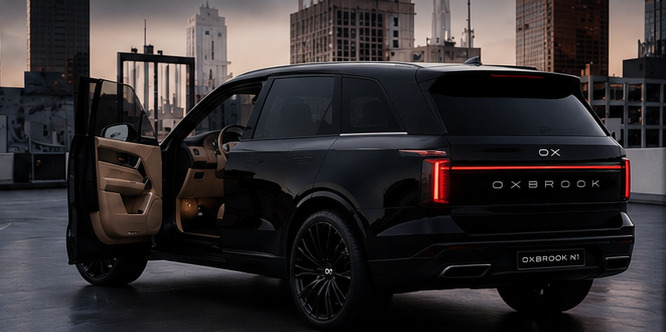
Obsidian Edition
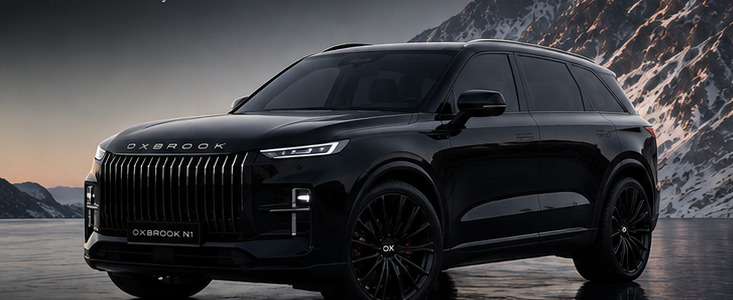
Gloss black over black with a closed monolithic grille and a tan hide cabin. The car reads as a shadow until the rear light bar wakes.
Model — OXBROOK N1
The N1 is OXBROOK's flagship: a full-size, three-row electric SUV built on an 800V architecture with a ~140 kWh battery and a 750–850 hp dual eAxle driveline. It is designed for families who want a genuine flagship rather than a stretched crossover — and it is engineered for the North Atlantic, where the weather forgives nothing.
800V
Architecture
~140kWh
Gross battery
750–850hp
System output
7seats
Three rows
Positioning
Most luxury electric SUVs are two-row cars with a third row added late. The N1 was dimensioned the other way round: a 3.15 m wheelbase and a flat floor were fixed first, and the exterior was drawn over them. That is why the rearmost seats take adults, and why the second row can be specified as two captain's chairs without stealing space from anyone.
The powertrain follows the same logic. A ~140 kWh pack on an 800V bus is sized for a heavy, seven-up car on a long winter drive — not for a headline figure on an empty test loop. The 750–850 hp dual eAxle target exists to make that mass feel effortless, quietly.
Everything above is an engineering target for a concept vehicle in early development, published openly so the programme can be judged on its substance.
Editions
Gloss black over black with a closed monolithic grille and a tan hide cabin. The car reads as a shadow until the rear light bar wakes.
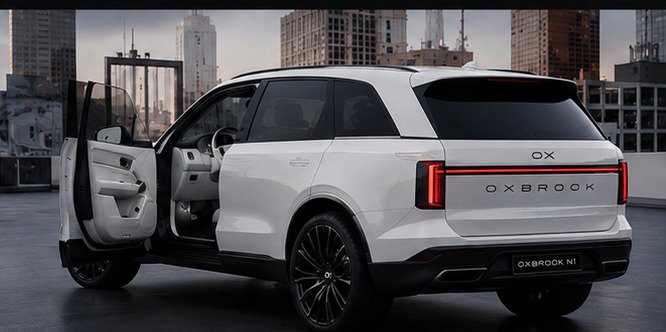
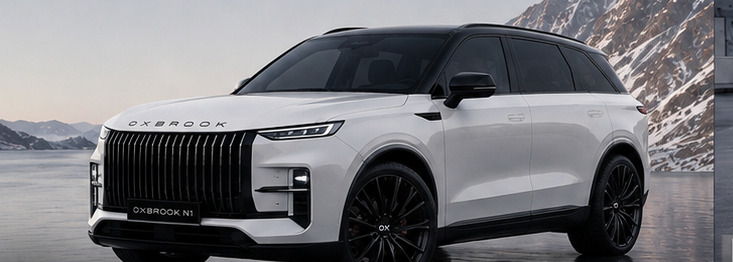
Pearl white with graphite detailing over a glacier-grey interior. The lighter, more formal reading of the same architecture.
Interior
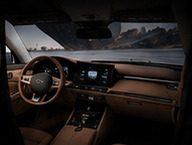
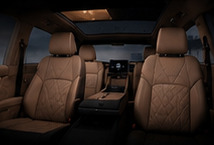
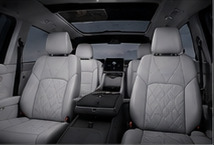
SpaceA flat floor and a 3.15 m wheelbase give three usable rows and a walk-through second row in the Executive layout.
MaterialBespoke hides, solid aluminium switchgear and a restrained Scandinavian palette in tan or glacier grey.
ComfortHeating, ventilation and massage on luxury seating, with acoustic glazing and a deliberately quiet cabin.
Full specification
All figures are engineering targets for a concept vehicle in early development. Final specification will be confirmed with development partners ahead of homologation.
Segment comparison
N1 figures are engineering targets. Competitor figures are published manufacturer specifications for the trims named, and are provided for context only.
| Specification | OXBROOK N1Engineering target | Mercedes-Benz EQS SUVEQS 400 4MATIC, 2026 | Volvo EX90Twin Motor Performance | Kia EV9GT-Line AWD, 2026 |
|---|---|---|---|---|
| Battery | ~140 kWh gross | 118 kWh | 111 kWh nominal | 99.8 kWh |
| System output | 750–850 hp | 355 hp | 517 hp (380 kW) | 379 hp |
| Peak DC charging | 250–350 kW target | 200 kW | 250 kW | 210 kW |
| Seats | 7 standard | 5 (7 optional) | 7 | 7 |
| Length | ≈5.25 m | 5.13 m (201.8 in) | 5.04 m | 5.01 m |
| Wheelbase | ≈3.15 m | 3.21 m (126.4 in) | 2.99 m | 3.10 m |
Range is deliberately omitted: the cars above are homologated on different cycles (EPA and WLTP), so a single column would not be a fair comparison, and the N1 has no homologated figure yet.
Sources — Mercedes-Benz USA (2026 EQS 400 4MATIC SUV specifications), Volvo Cars (EX90 Twin Motor Performance specifications), Kia Media (2026 EV9 specifications). Trims and figures vary by market and model year.
Common questions
Full-size. At roughly 5.25 m long on a 3.15 m wheelbase, the N1 is sized as a flagship three-row SUV, not a raised hatchback. The third row is designed for adults rather than occasional use.
Seven as standard, with a six-seat Executive layout available — two captain's chairs in the second row and a walk-through to the third.
Higher system voltage lets the same power move through lighter cabling with less heat. In practice that means a 250–350 kW DC charging target, quicker top-ups on long routes, and less thermal derating when you charge repeatedly in a day.
Low-volume production is targeted for 2029 or later, following prototype build in 2027 and validation through 2028. Private-list guests are invited to design previews before then.
On the North Atlantic coast. Scandinavian restraint is the design language, and North Atlantic weather is the durability brief — cold-soak, salt, wind and poor surfaces are the baseline, not the edge case.

Low-volume production is targeted for 2029+. Private-list guests are invited first to design previews.